Saturday, May 20, 2017

RT News: The Bruderhof Anabaptists Endorse Taizé

      Friday, May 19, 2017 - Yesterday, Darlene Maendel from the Bruderhof posted an endorsement of the contemplative movement called Taizé. Invited by the "brothers from Taizé", the author and three other members of this progressive ecumenical community of goods participated in a Taizé workshop in Birmingham, England. The theme of the weekend was "the celebration of the hidden ways Christians actively live out their commitment to Christ".


Bruderhof Outdoor Meeting

      "But central to the gathering", admits Maendel, "—and the drawing card of the weekend—were the Taizé prayer meetings[...] It was these prayers, rather than the workshops or other social activities, that everyone seemed to look forward to.
      "I asked some what drew them, year after year. The answer was the same almost every time: the silence and space to pray; the sense of community with others who came with the same purpose. Different words and different languages, but all variations of the same themes: community, unity, prayer.
      [...]
      "But for all, the experience of Taizé seemed to go beyond the physical place, and as we said our farewells and parted ways, each of us took home a new boldness to continue with our lives of discipleship." (emphases mine)

      What is Taizé? Taizé is a monastic community in Taizé, France, composed of over 100 members called Brothers, from Roman Catholic and Protestant backgrounds. Taizé is also a movement whose "philosophy is spreading quickly throughout evangelicalism" (Contemplative Mysticism, David Cloud, p. 9). Its communitarian, ecumenical, and contemplative emphasis originates with its founder, Roger Shütz who was a Reformed Protestant, and came to be known simply as Brother Roger.
      "A Taizé worship service involves sung and chanted prayers, meditation, a period of silence, liturgical readings, and icons. There is no preaching. The style of prayer practiced at Taizé has attracted many worshipers from around the globe and from many different denominations. The prayers consist of 'short chants, repeated again and again,' according to an introduction in a Taizé songbook. 'The words are sung over many times'" (www.questions.org).
      A quote from a Taizé Brother on their official website declares: "All humanity forms a single family and God lives within every human being without exception". This is panentheism. Panentheism is the belief that God abides in everything, including inanimate objects, animals, and non-Christians. 


Eucharist and funeral of Brother Roger, founder of Taizé

      Taizé provides images (icons) for worship. God forbids this, and commands us to "flee from idolatry" (1 Corinthians 10:14), and warns: "keep yourselves from idols" (1 John 5:21). Making ourselves a material image (idol) with our hands, or a mental image through visualization (guided imagery), to worship it, to pray to it, and to allow it to "heal" us is idolatry, and an abomination to the Lord!
      Taizé teaches repetitive prayers and singing, but the Bible forbids repetitive prayer. "When ye pray, use not vain repetitions, as the heathen do" (Matthew 6:7).
      Taizé teaches panentheism, but the Bible says, "Behold, I stand at the door, and knock; if any man hear my voice, and open the door, I will come in to him, and will sup with him, and he with me" (Revelation 3:10). If God lives inside every human being regardless of his faith, then every human being is saved. This is universalism, and a denial of Christ's atoning work on the cross.
      Taizé teaches ecumenism, having Christian fellowship with people of widely different beliefs and faiths, but the Bible commands us to "come out from among them, and be ye separate..., and touch not the unclean thing; and I will receive you" (2 Corinthians 6:17), and specifically, "I have written unto you not to keep company, if any man that is called a brother be... an idolater" (1 Corinthians 5:11).

      Dear friends, beware of Taizé and beware of the Bruderhof.


Redeem the time and take good care!


Saturday, April 22, 2017

VIDEO - Thomas Keating's Endorsement of "Kundalini Energy" (The "Serpent Power" of Hinduism) - by Chris Lawson

Kundalini energy is not simply neutral energy one can tap into either for good or evil. It is the power of Satan, historically manifested in Hinduism, and it's making it's way into Christian circles as we speak.                                  

"Flee from idolatry". "What communion has light with darkness. And what concord has Christ with Belial? ... God has said, I will dwell in them, and walk in them; and I will be their God, and they will be my people. Therefore, come out from among them... and I will be a Father to you, and you will be my sons and daughters, says the Lord Almighty".

Click on image to watch video

Disclosure: I don't know Chris Lawson, and can't fully endorse him. But this video is useful research.

Monday, April 3, 2017

New Pamphlet for Anabaptists! Old Earth Creationism and the Bible


Here is a brand new pamphlet from Redeemer Publications. This article appeared on this blog some time ago under the name "Let's Start from the Beginning".

While Postmodernism is a growing trend, Modernism is not dead. And it seems some Anabaptist Christians remain confused about what the Bible teaches regarding the beginning of this universe. Is Planet Earth billions of years old, or just a few thousand? Does the Bible answer this question? Is it important to know which view is true, and which is false?

This pamphlet allows the Bible to answer itself. I invite you to read it if you haven't already, and deepen your faith in the Word of God. 


Currently, ordering is available only by email. Send me a message to this address, and I will send you more info.

God bless!

Monday, February 27, 2017

Until That Day—A Song I Wrote

Gazing up into heaven, an old man stood by his rugged altar. Ah! Sunshine, fluffy clouds, blue skies! His feet were on solid ground! Yes, the old world was gone, but a brand new world had emerged. 

Then, Noah saw the rainbow, that stunning symbol of divine promise. Planet Earth would never be destroyed by water again.


Someday another "rainbow" will brighten the sky, another indelible promise will be given to man—"the New Earth will never be overthrown". At last, delighted angels will hear that anthem they could never sing, nor ever will, the anthem of those, who by special favor, became the children of the living God through the blood of the Lamb.

But until then, what?

Here's a little song I wrote as a testimony of hope and commitment. Jesus Christ has done so much for me. How should I not give my heart, my mind, my strength, my soul, my whole life to him!

(Scroll down for an audio sample of the song.)


Until That Day

1. Someday a rainbow will brighten the sky;
The New Earth will never be overthrown.
Someday God’s children will sing a new song,
A song that no angel can claim as his own.

Chorus
Until then there’s work to be done,
No time to be wasted, no chance to be lost.
Until that day we have a command,
Lead people to Christ no matter the cost.

2. One day, at Judgement Day we will know
The way we were known by Heaven above;
The good, the bad, the thoughts that we had,
The deeds that we did, out of pride, out of love.
  
3. Someday our hopes and prayers will come true,
Tears and all grief will vanish away.
Someday the Lord will gather us home;
We’ll praise Him, and serve Him, and honor His name!

Chorus 2
Until then we’ll stand with the brave,
We’ll rise in defense of the Gospel of Grace.
Until that day we’ll march with the strong,
We’ll never look back, we’ll never retrace.


Click here for a sample of Until That Day.

Monday, February 20, 2017

Critics Say Bill Facilitates Seizure of Children from Christian Homes

I certainly try to avoid political discussions on this blog, but this one has to do with the family, and more specifically, the Christian family. 


The traditional family, where the father is head, is under serious threat. It is a growing suspicion of mine that Ontario will not be friendly to Christian families for long, especially patriarchal homes—at least, as much as it is right now. And make no mistake, peace-loving, non-resistant culture will not save the Anabaptist from persecution. The new order of world government loves worldly peace and communitarianism, but it hates families that stand for something. The new paradigm of continuous change and social transformation cannot bear solid, stable homes, because they don't change, they don't budge, they don't give. They cannot be coaxed, or pushed, or manipulated. Christian homes stand on the New Testament commandments, and will suffer anything in order to be faithful to the Lord Jesus.

Here's a news article from LIFESITE USA: Ontario gov't bill makes it easier to seize children from Christian homes, say critics.

It is sobering to me. I think it should be to you too.

My opinion of modern tribulation (pressure), putting it bluntly, is that we may see little physical distress from our government, at least for the immediate future. Much of the pressure to conform will come through psychological methods of social transformation, although physical suffering will always be there, as Scripture prophesies it.

My question to Anabaptist Christians is this: How are you intentionally preparing for the possibility of heavy spiritual trials? How are you investing your spare time? Are you diligent in making your faith rock solid by rigorous personal Bible study and prayer? Are you "exhorting one another daily" (Heb. 3:13), so that none of us is hardened by the deceitfulness of sin? Are you compassionately warning your fellowman of the dangers of empty philosophy and wicked teachers who work from within the Christian fold?

Wednesday, February 1, 2017

Anabaptists and the Emergent Church Movement--An Introduction

  The Emergent Church Movement is here to stay, and it's inching its way into the far corners of Christianity. It's not too picky. It can join hands with liberals as well as conservatives, progressives as well as traditionalists; Pentecostals, Catholic, Baptists, Quakers, Neo-Gnostics, Mormons, Anabaptists, you name it. In fact, while it attempts to join together all Christian denominations, it also works toward harmony between world religions—Buddhism, Islam, Hinduism, Christianity, etc.

  You don't need to discard your traditional forms and cultural norms. You see, you can be emergent, or ecumenical, or a contemplative mystic, and appear to be a traditional Anabaptist in good standing with the church, and in harmony with all the dress codes and behavioral standards. Anyone willing to do it can dress up according to the stiffest rules a church may have, whether he's an "insider" or an "outsider" coming in.

New Ager, Deepak Chopra

  The emergent program of change breeds syncretism, a merging of opposite principles or practices—the Mix. It's the gradual blending of truth and untruth, paganism and God's Word, true prayer and contemplative prayer, Church and marketing, anything with anything. It's a sort of "Yin and Yang", an attempt to balance two extremes through the dialectic process.


  The emergent mindset that everyone's opinion needs to be affirmed has a cozy little niche in small Bible studies and Sunday School classes. Be careful. Our halls and study rooms had teachers, who conducted didactic Bible studies. Now we have discussion leaders. And much too often, the time gets gobbled up by shallow exchanges of personal opinions—"How do you feel about this verse?" "What do you think Jesus meant?" At times, it seems we've taken Sunday dinner talk into the church study hour. And then we wonder what to say to each other at Sunday dinners! It's an environment where objective voices increasingly seem to come across as "rude" or "proud", as they are seen to spoil "good feelings" and disrupt "good discussion". A person who claims to know something for sure is simply a narrow-minded fuddy-duddy.

  Michael Kruger hints at this glorification of subjectivity in a recent post, "Are Christians Arrogant? Rethinking the Definition of Humility": 

  "Over the years, the definition of humility has undergone a gradual but nonetheless profound change. Especially in the intellectual community. In the modern day, humility has basically become synonymous with another word: uncertainty.
  "To be uncertain is to be humble. To be certain is to be arrogant. Thus the cardinal sin in the intellectual world is to claim to know anything for sure." (michaeljkruger.com)

  There's a reason for all this. Emergent philosophy is not Truth-based, but relationship-based. While "truth" is said to have first priority, relationship is king, and Truth is disposable when relationship is under threat. "Let's agree to disagree" and "all opinions are equal" are a couple of pet phrases used when someone brings to the table truth too painful to accept and too perilous to the relationship. A couple of other phrases used as pretexts are "we don't want to worship a book" and "we need to follow the spirit of the law, not the letter that killeth". Certainly, we don't worship the Bible, neither do we live by the "letter that killeth", the Mosaic Law (2 Corinthians 3). But when we justify disobedience to the New Testament commandments, we are certainly not following the spirit of the New Testament. Satan uses truth as a tool, and he will use pretexts half-dunked in truth to rob your heart of integrity and Truth. 

  The emergent movement, through the agency of Church Growth principles and Total Quality Management, seeks to fulfill "felt needs", rather than preach the truth of the Gospel. It operates under pretexts such as "listening" to people, "caring" for the hurting, and teaching how to "lead like Jesus", while stealing disciples from Christ. Peter Drucker, known as "the founder of modern management" has played an important role in the shaping of Leadership Network. He admits "that the large congregations are basing their changes upon what the 'nonchurchgoers' want to get out of going to church, rather than preaching the Word of God" (quoted by Dr. Robert Kenck in Diaprax and the Church—an Analysis of the Church Growth Movement, p. 32). Dean Gotcher rightly declares: "When we seek and develop the approval of many by extrapolating from God's word only those verses or portions of verses which appear to justify social-personal harmony, and overlook scripture, which might cause social-personal disharmony, we steal from God the soul He seeks and we keep it for ourselves." (The Church Growth, Emerging Church—Diaprax Agenda). 

  Brian McLaren, the kingpin of the emergent church movement, says this about doctrine: "[We] need to move beyond our deadlock, our polarization, our binary, either/or thinking regarding faith and reason, religion and science, matter and spirit... We need a fusion of the sacred and the secular (as quoted in "Brian McLaren's Hope for the Future - The Minds of Your Grandchildren" by Lighthouse Trails). It's the outworking of postmodern thinking in the church, and the cornerstone of the ecumenical program of the apostate church of the last days.


Emergent church leader, Brian McLaren

  The Submerging Church quotes Roger Oakland:   

  "Rick Warren and others say we need to pay attention to the emerging church. Things are changing, they say and the 'emerging church' has the answers for our generation. But what will the emerging church emerge into? Could it be a form of Christianity that embraces experience rather than God's Word?"

  Emergent dynamics don't work like dynamite. They're not an explosion of change. They don't transform you and your church from one day to the next. It's a slow process of seduction. It's transformational but not instantaneous. It's designed to be that way.

  To be sure, emergent philosophy will not barge into Anabaptist churches by its mainstream name. It will saunter in under the cloak of seemingly innocent rubrics such as "missional church", "transformational leadership", "spiritual disciplines", "listening prayer", "contemplative prayer", and even "mindfulness". These are the "feigned words" of the false teachers the Bible warns us about in 2 Peter 2. Emergent facilitators use vague and emasculated terms to please both "traditional" people and "transformational" people. They love using soft or conservative terminology because they can hide their agenda. And they're effective in "privily" bringing in "damnable heresies". These things install themselves very nicely onto existing church platforms such as group Bible studies and Sunday School classes. They tend to make para-church organizations such as mission and ministry training centers, Bible schools and colleges, and Christian Schools its first targets. The best candidates to usher in emergent ideas are those who are within, or those who have once been within. Don't believe them. Believe the Bible.

  Ken Blanchard's popular leadership training program, Lead Like Jesus (LLJ), of which Luke Kuepfer is representative and trainer, uses the above-mentioned platforms to lay the groundwork for emergent change agents to begin their change process within our Anabaptists circles. The LLJ website states:

  "Lead Like Jesus' newest resource, Igniting Influence: Empowering Young Leaders to Lead Like Jesus, invites emerging leaders to join a long-lasting and widespread movement for good... Igniting Influence is a series of 12 leadership lessons well-suited for emerging leaders, anywhere from high school seniors to Millennials in the workforce" (emphasis mine; source).


  Ken Blanchard, also a New Age advocate, has intimate links with Rick Warren, as they have teamed up under the Lead Like Jesus program. Who is Ken Blanchard? What does he believe? What does he have to offer Anabaptists through LLJ?

  Ken Blanchard has written endorsements for many non-Christian books that promote Buddhism, Zen practices, Yoga, Hindu spiritual principles, and other pagan philosophies. What sort of biblical leadership insights would a teacher with such impaired discernment have for Christian believers?

  Quoting from Lighthouse Trails, a website makes the following commentary:

  "While Rick Warren is gearing up to train a billion people, unbeknownst to many he has also been teamed up with New Age and contemplative promoter, Ken Blanchard, for some time now. According to a new biography on Rick Warren, A Life with Purpose written by George Mair, Rick Warren has solicited the services of Ken Blanchard to aid him in training leaders: 'Rick taps the best and most famous to help train church leaders to be like Jesus. He has hired Ken Blanchard...to come to Saddleback to help train people how to be effective leaders' (p. 193). There is countless evidence to show that Blanchard sits on the New Age/mystical/contemplative bandwagon. Ken Blanchard believes in the benefits and use of mantra meditation, yoga and has no trouble borrowing from Buddhism. Blanchard wrote the foreword to Jim Ballard's books Mind Like Water and What Would Buddha Do At Work? He is on the front cover of Corporate Mystic and the back cover of Deepak Chopra's Seven Spiritual Laws of Success and wrote the Foreword to Ellen Ladd's (clairvoyant) book, Death and Letting Go. Blanchard makes no apology when he says much  can be gained from Buddhism. He and his wife both encourage the practice of yoga (p. 11) and mantra meditation. Ken Blanchard, Rick Warren, and Bill Hybels (Willow Creek) have become team players at the Lead Like Jesus conferences, which take place across North America. The three also have an audio set they co-authored together" (emphasis mine).

  You may ask why in the world I care about all this. 

  I would like to ask why aren't our leaders telling us these things? This stuff is all over the place. Why aren't they warning us about it?

  I am dismayed at the things I've seen during the last few years. Satan is truly burning the midnight oil to finish us off. He's destroyed so many churches out there. What makes me think he won't set his cross-hairs on mine? What makes you think your church is safe?

  I just can't be silent. I cannot watch what's happening to other churches and our churches, and say nothing. As miserable a watchman as I am, I have seen something, and cannot keep it to myself. Will God not require of me the blood of my brothers and sisters if I don't report what I know? Will I one day be justified before God's holy throne in saying, "Am I my brother's keeper?"

  What I shared in this post is just a sampling of all the stuff that's out there. It's so hard to summarize. Please, look for yourself. Satan is ready to take advantage of our ignorance, but we can be like the Apostle Paul and not be ignorant of his ploys (2 Corinthians 2:11).


Walk by faith, and take care!

Wednesday, December 14, 2016

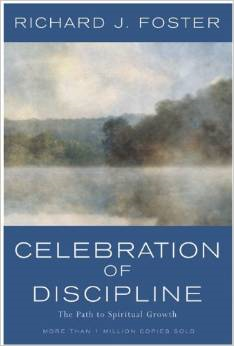
David Jeremiah Admits Celebration of Discipline Promotes New Age Practices

This is in response to an article that appeared in the most recent Lighthouse Trails newsletter: David Jeremiah Admits Richard Foster's Celebration of Discipline Promotes New Age Practices (Please read here).

Sadness. Things that were said to be "outside"— way outside—are now inside, very much inside. It is apparent that New Age philosophy and practice is beginning to make successful forays into the Conservative Anabaptist fortress through the Trojan horse of Contemplative Mysticism—the Spiritual Disciplines.

Indeed, we as followers of Christ are to seek that which is spiritual, and live a disciplined life in accordance with the New Testament, diligent in the study of God's Word and persistent in prayer. However, the infrastructure of the "Spiritual Disciplines" is not constructed from the building blocks of the Christian Scriptures, but from the stuff of ancient paganism, resurrected in earlier centuries by popish monks and today by their emergent modern mystic and New Age counterparts.

Richard Foster
One illustration of this infiltration is the use and promotion of the book "Celebration of Discipline" in Amish/Mennonite churches and organizations. One such institution who promotes and sells this book with no word of caution is Faith Builders Educational Programs (FB), located in Guys Mills, Pennsylvania. The book was written by Quaker and mystic Richard Foster. The book is listed on the website of a local Christian store owned by a Mennonite bishop, and has also been used in group book studies by conservative Mennonites here in Southern Ontario.

Does this mean everything taught by FB is tainted? Absolutely not! But when will be stand back, and notice and recognize teachings and practices that do not line up with Scripture? When will we do something decisive in order to keep pure our precious doctrine? When will we finally understand that error loves to cloak itself behind the plainest vestures and the most honorable displays? If we desire to have schools that will teach sound doctrine to our youth, why not pay a closer look at their curriculum and keep them accountable in meekness and love?

A while ago, someone asked Lighthouse Trails (LT) if they were aware of any influence from contemplative mysticism at Faith Builders. LT replied: "I think all you have to do is visit the website of Faith Builders publishing arm, and you will see some of their persuasions. Here is an example: https://christianlearning.org/books/discipleship/prayer.html. They have Richard Foster and Madame Guyon. I think if you take a close look at this school, you may find some serious concerns."

People, the night is far spent. The day is just about to break. Cast off the works of darkness. Put on the armor of light! (Romans 13:12).

Now you know. Share with others.

Thursday, October 27, 2016

Be Strong in the Grace

Some of my thoughts from devotions this morning—2 Timothy 1:19.

"Be strong in the grace..."

It's a curious phrase. Can we possess God's grace and not be deriving strength from it? Apparently so. It's up to us, at least to a degree, to engage the power of the grace given to us. "Be strong", then, is a command to take hold of that enabling power, and put effort into using it, so that it can flow through us.

Be strong in the grace today!

Sunday, July 3, 2016

Are We to Keep Both Covenants?

The New Covenant is often called the New Testament, and is rightly compared to the last will and testament of one departing from this life. "For where a testament is, there must also of necessity be the death of the testator. For a testament is of force after men are dead: otherwise it is of no strength at all while the testator liveth" (Hebrews 9:16, 17). The Mosaic Law was thus in force only until the death of Christ. All His lifetime on earth, Jesus lived as a Jew, but, being full of the Spirit of God, He taught, exemplified, and instituted New Testament doctrine. When a will is made and duly authorized, it is not in force until the death of the maker. If he makes a new will, however, and dies, it is the latter will which is binding, and the first then has no legal force at all. Thus, when God in Christ brought a new will and sealed it with His own blood, it became binding, and the first then became of no legal status in His sight, despite the fact that it was "holy, and just, and good" (Romans 7:12). To try to keep both is to recognize neither the passing of the Old Law nor the legal force of the New.

Romans is still stronger in its wording. It compares one who would be under two covenants to a woman who has two living husbands, declaring such to be an adulteress, she being married to another man. "Wherefore, my brethren, ye also are become dead to the law by the body of Christ; that ye should be married to another, even to him who is raised from the dead" (Romans 7:4). Being under two covenants would constitute adultery in the spiritual sense.

Some maintain that this refers to keeping the "Ceremonial Law" and not the "Moral Law." The Scriptures make no such artificial division, the moral concepts of the Old Law being superseded by those of the New, just as the ceremonies are also done away. We are to be "dead" to the Law. (Romans 7:1-4). But what Law? The "Ceremonial Law" only? Notice the context: the discourse is continuous, and verse 7 identifies this Law with the Ten Commandments: "I had not known sin, but by the law: for I had not known lust, except the law had said, Thou shalt not covet."

Again, in 2 Corinthians 3, where the glory of the Old Covenant is described as being "done away" - what portion of the Law is being referred to? Is it not that which was "written and graven in stones," associated with the glory emanating from the countenance of Moses on Mount Sinai? This again is unmistakably the Ten Commandments, indicating that the entire Old Covenant is included in that which is superseded by the New.

Most important is the fact that this New Will of God is associated with the experience of regeneration. Without it, even the Old Covenant, which was on a lower spiritual plane, was not kept. It was "a yoke . . . which neither our fathers nor we were able to bear"(Acts 15:10). But the blood of Christ cleanses the conscience, which the Law could not do (Hebrews 9:13, 14). Our entire viewpoint is altered: the mind is renewed (Titus 3:5), as we are transformed by the Spirit of Christ. In this sense, the New Law is "written in our hearts," and we are empowered to keep the everlasting covenant to the glory of Christ our Saviour.

The tragedy of "Christendom" (including Fundamentalism) is that, almost two thousand years after the birth of Christ, it still does not realize that the Covenant of Christ is complete and perfect without the Old Law, which has passed away. Its haziness on the two covenants is responsible for much of the glaring inconsistency that robs us of the power and testimony of the New Covenant. In any real crisis, the carnal and the worldly will thumb back to the Old Testament to justify their position on carnal warfare, divorce and remarriage, worldly adornment and attire, and conformity to the world in general. This is the challenge that we meet today. May we have a true church - a New Testament body of believers.

—by G. Richard Culp
Tract 11E12
Rod and Staff Publishers Inc.

Sunday, May 15, 2016

Let's Start from the Beginning

                In an age of exploration and fascinating scientific discoveries, Anabaptist Christians are asking questions of current importance that require honest and satisfying biblical answers. “How old is the earth?”[i] “Could the Universe be billions of years old?” “Is our society’s view of origins compatible with Genesis 1?” I myself have wondered whether the Bible really treats this subject with enough clarity as to preclude an “old earth” view of origins. I would like to invite you to look at three lines of evidence I found in God’s Word that convinced me that our Universe was directly created by God in only six days in its entirety, and without any time gaps at the Foundation of the earth


                But first, I would like to provide some quick facts on a view that has only become popular among mainstream Christianity since the beginning of the 19th Century[ii]: Old Earth Creationism. It is a view I believe is beginning to be considered and adopted by some conservative Anabaptists as we speak. What is Old Earth creationism?
·         Old Earth creationism[iii] is a general term that covers gap creationism[iv], progressive creationism[v], and evolutionary creationism[vi].
·         Christians[vii] who are Old Earth creationists (OECs), as well as their humanist counterparts, generally believe Planet Earth is as old as 4.5 billion years, and the Universe, 14 billion years.
·         Belief in Old Earth creationism leads to the acceptance of death before the Fall of man, which in turn leads to the idea that the Flood of Noah’s time likely wasn’t global.
·         Not all OECs believe in the Big Bang or in evolutionary creationism.
·         Not all OECs disbelieve the literal six 24-hour-day Creation.

I. Was the “raw” Universe created outside the Creation week?
                Gap creationists believe that the foundation or framework of the universe was created at a point in a very distant past. The creation of this cosmic framework is separated from Day One of the Creation week by a gap of billions of years. Some also believe that the original world eventually was destroyed by a cataclysm called Lucifer’s Flood, and out of the resulting chaos (cosmic wasteland) God made the world we know today.
                But in light of what the Bible says, could the earth, sun, moon and stars have been created millions of years before Day One of the Creation week? To my knowledge, there are only three passages in the Bible that speak to this. The first one, of course, is found in Genesis 1:1:
                              
In the beginning God created the heaven and the earth.

                Perhaps, we could say this verse does not specify whether heaven and earth were completely finished at the time of creation. But it does tell us that there was a beginning, and that heaven and earth did not exist before this Beginning. This would seem unnecessary to mention, but do keep it in mind for later.
                The next passage is found in Exodus 31:17:

It [the Sabbath] is a sign between me and the children of Israel for ever: for in six days the LORD made heaven and earth, and on the seventh day he rested, and was refreshed.

                This passage provides an important detail: “in six days”. What happened within six days? The LORD made heaven and earth. By this we know without a doubt that the whole Universe was made within the six days of Creation.
                The last clue is found earlier, in Exodus Chapter 20, verse 11:

For in six days the LORD made heaven and earth, the sea, and all that in them is, and rested the seventh day: wherefore the LORD blessed the sabbath day, and hallowed it.

                This verse is more explicit than the previous one. It provides additional details regarding what was made within the six days of Creation. Heaven and earth, including all it contains, were made by the LORD at the very beginning, within the six days of Creation, and not before. Some have suggested a distinction between the verb “create” and “make”. They claim that God created the Universe and Planet Earth at a point in time in the distant past, and billions of years later, He made “all that in them is”. But this passage breaks down the argument, because it says that God not only made the contents of the universe within six days, He also made heaven and earth during the same period. It seems abundantly clear that the Beginning and the six-day Creation week are one and the same.

II. Was the Creation of the Universe complete at the Beginning?
                I suppose something most conservative Anabaptists take for granted is that the creation of the Universe was initiated and completed between Day One and Day Six of the creation week. However, it’s interesting to note that the logic of Old Earth creationism, especially gap creationism, requires the initiation of Creation to occur before the Beginning. How so? When one believes there was a gap between the initiation of the Universe and the making of “all that in them is”, one is forced to believe that divine creative activities were occurring long before the Beginning, since, as we saw above, the Beginning and the six-day creation week are synonymous. In order to be certain of the possibility of a cosmic gap, I suppose one would need to look for a biblical warrant for a first Beginning and a second Beginning, which I have not been able to find.
                Another view among gap creationists involves the idea of day-ages. Each day of the creation week may represent a period of millions or billions of years.
                When we search the Bible, we find two passages that speak to this:
                              
From the beginning of creation God made them male and female. Mark 10:6
He which made them at the beginning made them male and female. Matthew 19:4

It couldn’t have been said clearer: Humankind was made at the Beginning of creation, not billions of years later. The biblical fact that humans were made on the last day of creation leads us to believe that the last day of Creation must also be considered as the Beginning. If Jesus called Day Six “the Beginning”, would it be reasonable to say that the Bible allows room for millions of years between Day One and Day Six, while placing both days equally at the Beginning? And how reasonable is it to believe that the Beginning took millions or billions of years to begin?

III. Was the Beginning at the Foundation of the earth?
                 Let’s look at the subject from another angle. Could there have been a gap of billions of years between the Foundation of the earth and the Beginning? Did God’s creative work continue billions of years after He laid the foundations of Planet Earth?
                I have found four passages in Scripture that speak about the foundation of the earth or the world. The first one is Isaiah 40:21:

Hath it not been told you from the beginning? Have ye not understood from the foundations of the earth?
               
                Not a strong argument, but it does seem to imply that humans, able to hear and understand, existed from the Beginning as well as from the Foundations of the earth. Could this possibly mean they are both the exact same events?
                The second verse tells us about Abel, the first martyred prophet:
                              
That the blood of the prophets, which was shed from the foundation of the world may be required of this generation; from the blood of Abel unto the blood of Zacharias. Luke 11:50, 51

               
                This passage explains that the blood of the prophets was shed from the foundation of the world[viii]. Abel, Adam’s second son, lived only several years after the creation of his parents. Apparently, he lived and died so close to the Beginning that even he was said to have lived at the Foundation of the world. Would it be reasonable to think that there was a gap of millions of years between the Foundation and the completion of Creation at the Beginning?
                The third verse is more specific:
               
The works were finished from the foundation of the world…and God did rest the seventh day from all his works. Hebrews 4:3, 4

                God rested on the seventh day from all His creative works, because his creative activities were indeed completed at the very foundation of the world.
                And finally, a passage that seems to be a direct answer to our question, “Was the Beginning at the Foundation of the earth?”
               
                               Thou, Lord, in the beginning hast laid the foundation of the earth. Hebrews 1:10
 
                After seeing all this biblical evidence for myself, I had to wonder whether the controversy between traditional creationism and Old Earth creationism is a matter of opinion or a matter of belief. Does it really matter whether God created the world within six 24-hour days or across billions of years?
                The three lines of arguments I have found in Scripture have given me abundant and satisfying evidence that the Bible does teach that our Universe was directly created by God in only six days in its entirety, and without any time gaps at the Foundation of the earth. If God had not recorded any of this, then I would be willing to accept that none of it is important to our understanding of God. But since He did, and He did it in a very careful and detailed fashion, I find that recent Creation is a truth worthy of universal acceptance and belief among Christians everywhere. To me, the controversy between Young Earth and Old Earth creationism seems to be more a matter of belief in the veracity and authority of God’s Word than of personal opinion or lack of biblical clarity.
-E.S. Gutwein


Endnotes:
[i] I have not taken the time to explain how the Bible teaches a 6,000 year-old Earth, but check out the following link for an explanation: http://creation.com/6000-years.
[ii] Stephen Lawell, The Gap Theory (Echoes of Eden, 2008), p. 13.
[iv] “Simply stated, the gap theory is the idea that a long period of time transpired between God’s initial creation in Genesis 1:1 when He ‘created the heaven and the earth’ and Genesis 1:2 when the earth was ‘without form and void’” (The Gap Theory, p. 7).
[v] “Progressive creationism…is the belief that God created new forms of life gradually over a period of hundreds of millions of years” (https://en.wikipedia.org/wiki/Progressive_creationism).
[vi] “Theistic evolution, theistic evolutionism, or evolutionary creationism are views that regard religious teachings about God as compatible with modern scientific understanding about biological evolution….Supporters of theistic evolution generally harmonize evolutionary thought with belief in God, rejecting the conflict thesis regarding the relationship between religion and science – they hold that religious teachings about creation and scientific theories of evolution need not contradict each other.” (https://en.wikipedia.org/wiki/Theistic_evolution).
[vii] To clarify, this essay employs the term “Christian” in a general way for nominal and faithful believers indistinctively.
[viii] The term “world” (Gr. cosmos) in the New Testament refers to several things including the universe, the inhabitants of the earth, and Planet Earth itself. While the term “world” is broader than “earth”, it certainly includes Planet Earth.

Tuesday, February 9, 2016

Joint Spiritual Efforts with Other Denominations


These thoughts are not meant to promote animosity or cause hateful feelings toward believers from other denominations. It is simply an outline of what we believe the Bible teaches on joint spiritual ventures, or what is sometimes called “ecumenical efforts”. We as Anabaptists believe the Bible doctrine of separation, but may have not always understood well what our relationship to other denominations should be.

1. Ecumenical programs constitute a type of unequal yoke. “Be ye not unequally yoked together with unbelievers: for what fellowship hath righteousness with unrighteousness? and what communion hath light with darkness?” (2 Corinthians 6:14).
The Bible also says, “But though we, or an angel from heaven, preach any other gospel unto you than that which we have preached unto you, let him be accursed” (Galatians 1:8). And again, “As we said before, so say I now again, If any man preach any other gospel unto you than that ye have received, let him be accursed”  (Galatians 1:9).
Is it right to join hands in spiritual ministry with believers who condone murder by abortion, divorce and remarriage, female leadership over men, non-resistance, and other things clearly stated in Scripture?.

2. Joining hands as a matter of course with Christians from other denominations or religions in religious ministry is a sign of ecumenicalism and a slide towards apostasy. We don’t condemn them to hell, neither do we deny that many of them are sincere. God will be the final judge at the end of time, but we are not allowed to join hands with them now. Many Anabaptist Christians are losing or have completely lost this concept. Will we stand up and be an example to them?

3. We are told to not have company with them, and to admonish them. “If any man obey not our word by this epistle, note that man, and have no company with him, that he may be ashamed. Yet count him not as an enemy, but admonish him as a brother” (2 Thessalonians 3:14-15).
            “If any man teach otherwise, and consent not to wholesome words, even the words of our Lord Jesus Christ, and to the doctrine which is according to godliness….from such withdraw thyself” (1 Timothy 6:3, 5).

4. Take a look at Jehoshaphat’s ecumenical compromise with Ahab. “Now Jehoshaphat had riches and honour in abundance, and joined affinity with Ahab…..And Ahab king of Israel said unto Jehoshaphat king of Judah, Wilt thou go with me to Ramothgilead? And he answered him, I am as thou art, and my people as thy people; and we will be with thee in the war” (2 Chronicles 18:1, 3).
            Do we need to “enquire at the word of Lord” (verse 4) to know this is wrong? Jehoshaphat did it anyway, and this is what God told him: “These have no master; let them return therefore every man to his house in peace” (verse 16). God has always been displeased when His children made alliances with Gentiles, whether Jews or New Testament Christians.

5. We are commanded to come out from among the system of the world and of false religion, and be separate from them. “And I heard another voice from heaven, saying, Come out of her, my people, that ye be not partakers of her sins, and that ye receive not of her plagues” (Revelation 18:4; 2 Corinthians 6:17).
            Do we want to be implicated?

6. When we join hands with people of other beliefs in an affiliated way, we compromise and stain our testimony and our message. When we join in religious ministry with Christians of other faiths and denominations, we begin to compromise our own faith and ministry.
For example, at our programs we warn about eternal judgment, but if our friends from other denominations teach there is no eternal lake of fire, how can we give a clear effective message from the stage? We teach that we live under Christ’s New Testament Law, but if they teach we are also under a portion of the Old Testament Law, how can we freely teach what the Bible says in Galatians 5:4, that “Christ is become of no effect unto you, whosoever of you are justified by the [Old Testament] law; ye are fallen from grace.” We teach the Bible is the final and complete revelation from God, but if they teach that it is not, and that we can fully trust the writings of other “inspired” men or women, how can we begin to put our ministries together on the same level, on the same stage?


            Compromise is a crucial underlying principle in all ecumenical efforts. The common denominator is sought, and sharing any disagreeing view is severely looked down on. Is it possible to be a pure and bright light when it must be hid under a bushel?


Note: This is a shorter version of an article meant to accompany a statement made by New Heights Quartet on their blog in regards to an ecumenical event organized by a group of Anabaptist believers in Goshen, Indiana. The organizing committee of this Acappella Gospel Sing invited a Seventh-Day Adventist quartet to present a program this year's (2016) event.